"The Gulag is not the end of the line, but the beginning of a new story."— THE WARDEN
Introduction: The Utility Company and The Gulag Discord Community
Welcome to Dimension GG4.261T
The Utility Company: More Than Just a Conglomerate
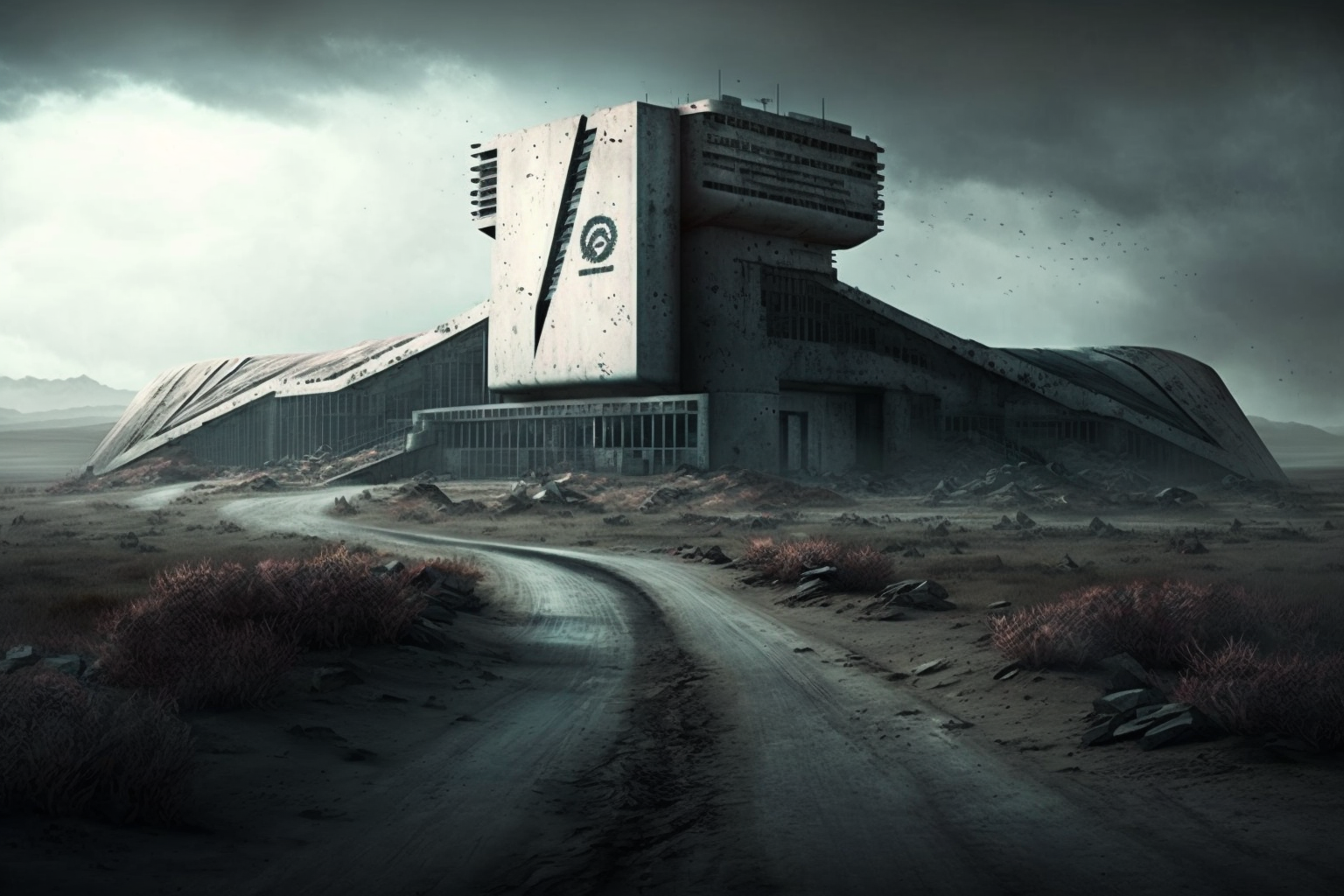
Let's cut through the corporate jargon right away: The Utility Company isn't your typical faceless corporation. It's a conglomerate with a mission that sounds almost too ambitious—being the frontrunner in Industrial Automation as a Service (I3AS) while actually helping people become *self-reliant*.
Yeah, you read that right. A company that wants to put power—literal and metaphorical—back into the hands of individuals and communities. Wild concept in an age where most tech companies are busy figuring out how to squeeze another subscription fee out of you.
With four subsidiaries already operating and plans to expand faster than a startup founder's ego, The Utility Company is betting big on web3 architecture and NFT technologies. Not as speculative monkey JPEGs, but as actual tools for digital provenance. The goal? Enable people to create more than they consume. Revolutionary? Maybe. Idealistic? Definitely. But someone's got to try.
And then there's The Gulag.
Industrial Automation as a Service: What's the Big Deal?
Here's the thing about I3AS—it sounds like something an consultant would say to justify a six-figure invoice. But strip away the buzzwords and there's actually something interesting underneath.
Imagine having access to industrial-grade automation without needing to, you know, *own* an entire factory. The Utility Company wants to democratize access to tools that have historically been locked behind massive capital requirements. Think of it as "the cloud" but for making actual physical things happen in the real world.
Web3 enters the picture as the backbone—not because blockchain is magic, but because decentralized systems can provide the kind of transparency and provenance tracking that traditional corporate structures struggle with. Every transaction recorded. Every contribution acknowledged. Every piece of copper tracked from mine to machine.
But here's where it gets weird (and wonderful): to test these ideas, The Utility Company created something that shouldn't work—a Discord community built around convicted criminals, factional warfare, and an elaborate redemption narrative.
Welcome to the experiment.
Web3 Architecture: The Digital Backbone
Let's talk tech without putting you to sleep.
The Utility Company uses web3 architecture—think decentralized systems, smart contracts, and NFT technologies—not because it's trendy, but because it solves actual problems. Specifically: how do you prove ownership, track contributions, and distribute rewards fairly in a community where trust is... complicated?
NFTs in this context aren't profile pictures. They're digital receipts. Proof that you contributed. Evidence that you earned your place. In a system where former criminals are rebuilding their reputations, that kind of verifiable history matters.
The architecture enables something called "digital provenance"—a fancy way of saying "we can prove where things came from and who did what." For a community built on redemption, that's not just nice to have. It's essential.
Think about it: if you're an ex-copper-cutter trying to go legit, wouldn't you want an immutable record of every honest day's work? That's the promise. Whether it delivers is what this whole grand narrative is about.
The Gulag: Dimension GG4.261T's Harshest Address

Every Discord server has its troublemakers. Most just ban them.
The Utility Company took a different approach: what if, instead of kicking out the troublemakers, you gave them their own corner of the server to build something? What if you turned punishment into opportunity?
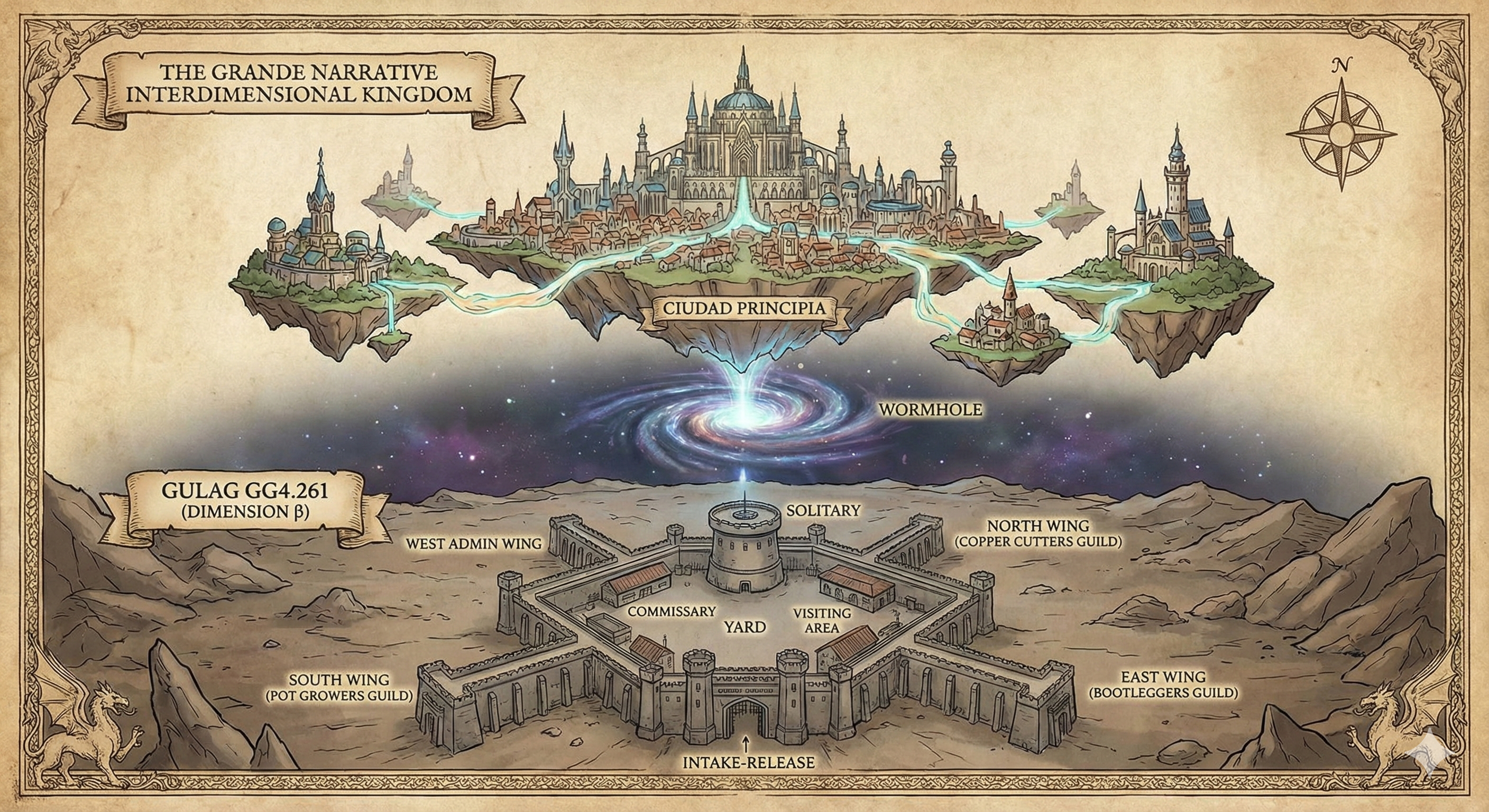
Thus was born The Gulag in Dimension GG4.261T—the harshest Discord prison in all the multiversal communities. This isn't metaphor. It's an actual section of the Discord server where convicted members serve their sentences.
The Gulag is divided into four wings:
The West Wing — Home of The Gulag Administration. Think of it as the warden's office, but with more Discord bots.
The North Wing — The Copper Cutters Guild's territory. Steel-toed boots and copper wire vibes.
The South Wing — Where The Pot Growers Guild cultivates their... community spirit.
The East Wing — The Bootleggers Guild's domain. Moonshine and scheming since day one.
Plus communal areas: The Yard for socializing, The Commissary for trade, Visiting Area for outsiders, and Intake-Release for... well, exactly what it sounds like.
The Grande Narrative: Why Tell This Story?
Here's the uncomfortable truth about online communities: structure without story is just bureaucracy. Rules without meaning are just constraints. You need something bigger—a *narrative* that gives purpose to the chaos.
The Grande Narrative isn't just documentation. It's the origin story, the operating manual, and the future vision all wrapped in one. It tells the tale of how former administration members fell from grace, were convicted and sentenced to The Gulag, and how they're building their way back to redemption.
Yes, it's melodramatic. Yes, it's elaborate. And yes, that's entirely the point.
Because when you frame community participation as part of an epic story—where every copper wire cut, every pot grown, every bottle of moonshine distilled is a step toward redemption—suddenly people *care*. They're not just following Discord rules. They're living a narrative.
The guilds should become strong, wealthy communities. That's the promise. The path there? That's the journey we're all on together.
Structure: Who Runs This Place?
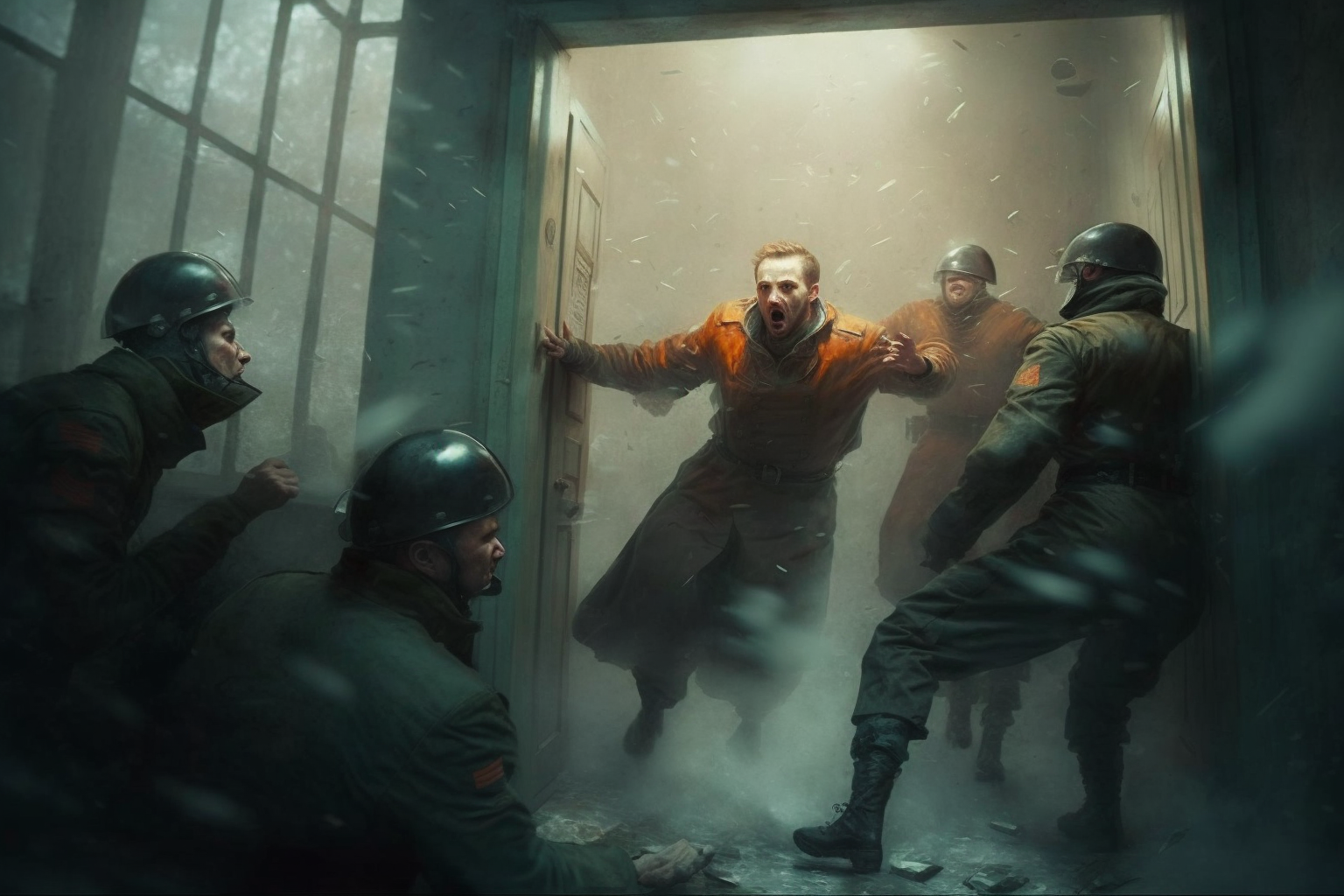
Let's break down the power structure, because in any prison—digital or otherwise—knowing who's in charge matters.
The Gulag Administration operates from the West Wing. At the top sits the Warden, with an organizational hierarchy below handling everything from security to cell assignments. They're the referees, the judges, and occasionally the jailers.
The Copper Cutters Guild supplies the raw materials—copper—that keep the other guilds operational. Industrial, essential, unglamorous work that makes everything else possible.
The Pot Growers Guild cultivates cannabis (in the narrative sense, calm down). They've had... let's call it "dynamic leadership changes" over the years.
The Bootleggers Guild produces and distributes liquor. Every prison economy needs its vices, and these folks deliver.
The interplay between these factions—cooperation, competition, occasional outright conflict—is what makes The Gulag work. It's designed chaos, channeled into productivity.
The Code: Rules That Actually Make Sense
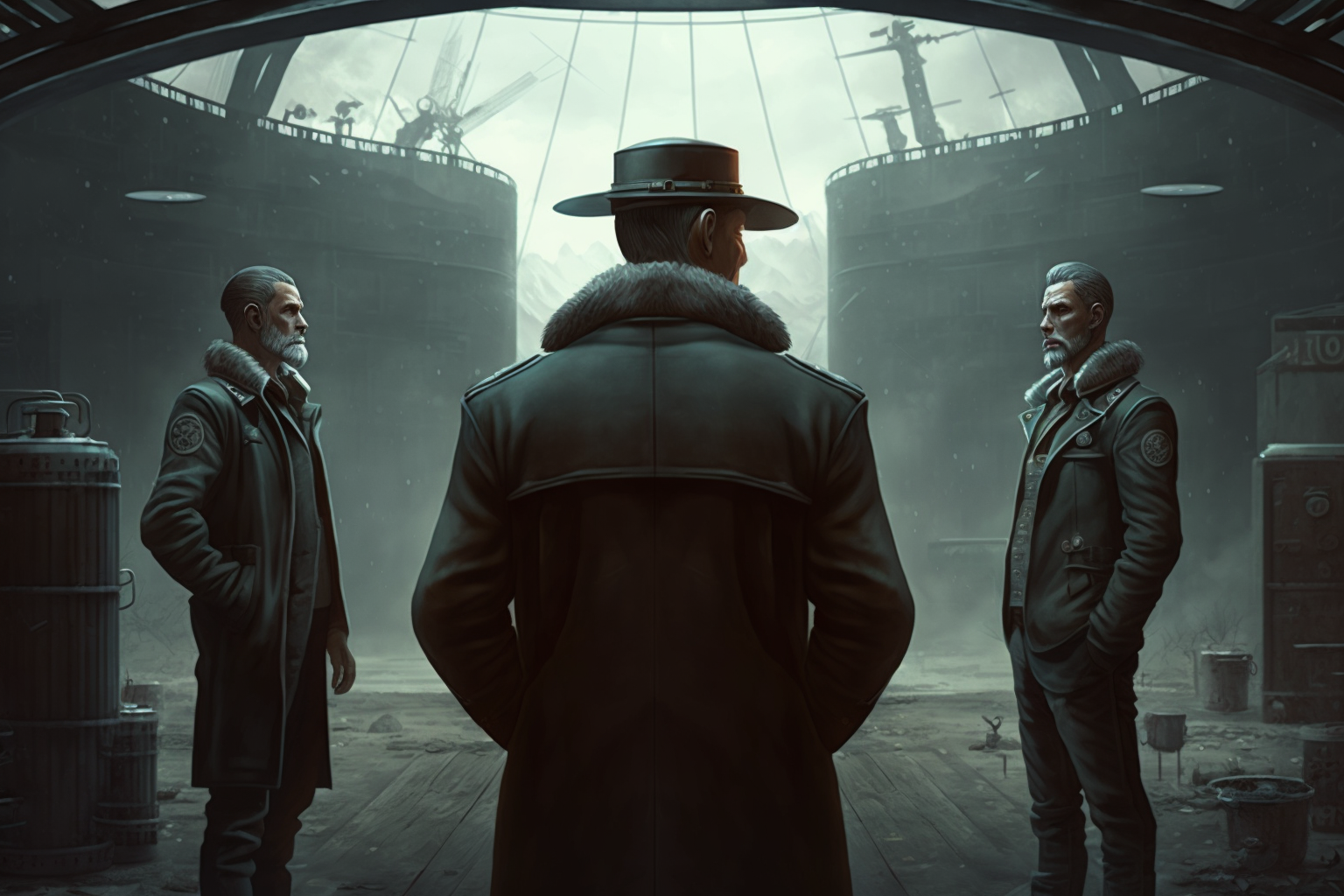
Every community needs rules. Most communities make them boring. The Utility Company tried something different.
The Code of Conduct isn't just a list of "thou shalt nots." It's woven into the narrative. Break the rules? You're not just getting banned—you're being *sentenced*. There's storytelling built into accountability.
The code covers the usual suspects: no harassment, no discrimination, no sharing personal information without consent. But it also serves a deeper purpose: creating a framework where people who've already "screwed up" (in the narrative) have a clear path back.
Accountability here isn't about punishment for punishment's sake. It's about maintaining stability so that the redemption arcs can actually happen. You can't build a wealthy guild if everyone's constantly at each other's throats.
Communication is encouraged. Collaboration is rewarded. And the whole thing is designed to feel less like a rulebook and more like the natural laws of a fictional universe.
The Guilds: Redemption Through Production
Here's the beautiful thing about The Gulag Guilds: they take the concept of "rehabilitation" and give it actual meaning.
In real prisons, rehabilitation is often a hollow promise. In The Gulag, it's the whole point. Each guild provides its members with purpose, community, and a path to earning their way out.
The Copper Cutters Guild — Founded by former Central Intelligence Utility Agent Eric. These folks mine and process the copper that other guilds need. It's hard work, literally building the infrastructure of the community.
The Pot Growers Guild — Sam The Capitalist's legacy (before the coup, but we'll get to that drama later). Growing, harvesting, and yes—selling to the Commissary.
The Bootleggers Guild — Sheriff BeardedBro and Agent Brew, both fallen from grace, now running the most popular tavern in digital prison.
Each guild develops its own culture, leadership, and traditions. They compete but also collaborate. They have beef but also shared interests. It's messy, complicated, and deeply human—which is exactly what makes it work.
The promise is simple: work hard, play by the rules, build something together, and eventually? Freedom. A return to the broader community. Redemption earned, not given.
That's The Grande Narrative in a nutshell.
"In the harshest prison of the Discord multiverse, convicted criminals built empires from copper wire, moonshine, and a whole lot of audacity.
The Importance of Community Factions in Discord Moderation
Strength in Division
Factionalism: The Bad Word That Works
Here's a word that makes community managers break out in cold sweats: *factionalism*.
The conventional wisdom says factions are bad. They divide communities. They create drama. They turn friendly servers into war zones. And honestly? That's often true. Poorly managed factions are a recipe for disaster.
But The Utility Company Discord took that conventional wisdom, looked it dead in the eye, and said "hold my moonshine."
The result? Factionalism that actually *strengthens* community bonds. Three distinct guilds—Copper Cutters, Pot Growers, and Bootleggers—each with their own identity, territory, and purpose. Not fighting against each other (mostly), but competing *with* each other toward shared goals.
The secret sauce isn't avoiding division—it's channeling it. Give people a tribe to belong to. Give that tribe meaningful work. Set up guardrails so competition stays healthy. Then watch as strangers become teammates become family.
It shouldn't work. And yet, here we are.
Accountability: When Your Guild Has Your Back (And Your Mistakes)
One of the hardest problems in online communities is accountability. Anonymous strangers on the internet don't always feel responsible for their actions. Shocking, I know.
Factions change the equation.
When you're part of The Copper Cutters Guild, your actions don't just reflect on you—they reflect on your entire guild. Screw up badly enough, and it's not some faceless admin who comes down on you. It's your guildmates, asking "what the hell, man?"
Peer pressure gets a bad rap, but the right kind of peer pressure is incredibly effective. The guilds create small, tight-knit communities within the larger community. People know each other. They develop relationships. They have reputations to maintain.
The Gulag Administration sets the overall rules, but the guilds enforce *culture*. They hold their own members to standards. They call out bad behavior before it escalates. They celebrate wins together.
It's accountability through belonging, not punishment. And it works way better than the traditional "mod team versus everyone else" model.
Healthy Competition: Racing Each Other to the Top
Competition can be toxic. We've all seen servers where rivalries spiral into harassment, doxxing, and worse.
So how do you harness competitive energy without letting it burn everything down?
The Gulag solves this by giving factions *genuine* stakes. The guilds aren't just for show—they produce things, trade things, build things. The Copper Cutters supply essential materials. The Pot Growers cultivate valuable crops. The Bootleggers distill liquid courage.
When competition has real outputs, it becomes productive rather than destructive. Guilds race to be more efficient, more innovative, more profitable. They develop new techniques. They recruit talented members. They invest in their future.
The Gulag Administration plays referee, ensuring nobody crosses lines. But the drive to compete? That comes from within. And that self-sustaining energy is worth more than any amount of top-down motivation from moderators.
Factions don't just allow for healthy competition—they *require* it. That's a feature, not a bug.
Conflict Resolution: Structured Disagreement
Let's be real: conflicts happen. People disagree. Tempers flare. Someone says something stupid at 2 AM and suddenly there's a server crisis.
The factionalized structure actually helps here. How? By creating clear boundaries and clear escalation paths.
When conflict erupts *within* a guild, the guild's leadership handles it. They know the people involved. They understand the context. They can resolve things quickly and quietly.
When conflict erupts *between* guilds, it goes to the Gulag Administration. But even then, having distinct factions helps. It's not "random person A versus random person B." It's representatives from organizations that have ongoing relationships and shared interests in keeping the peace.
Plus, there's something to be said for letting factions have their rivalries—within limits. A little trash talk in The Yard? That's entertainment. Coordinated harassment campaigns? That's getting someone sentenced to solitary.
The key is having structures in place *before* conflicts happen. Clear channels. Known procedures. Trusted arbitrators. When drama hits (and it always hits), you're not improvising—you're executing a playbook.
Leadership Ladders: From Grunt to Guildmaster
Here's something most Discord servers get wrong: they have no clear path to leadership.
Want to become a mod? Hope an existing mod notices you. Want more responsibility? Wait for someone to burn out and quit. The whole thing is vibes-based, which means it's often politics-based.
The faction system creates actual ladders.
Start as a fresh member of the Copper Cutters? Sure, you're at the bottom. But the hierarchy is clear. The skills needed for advancement are documented. The election processes are transparent. Anyone can see the path from newcomer to guild leadership.
This matters for two reasons. First, it's motivating—people work harder when they can see what they're working toward. Second, it's fair—leadership emerges from demonstrated ability rather than who-you-know.
The guilds develop their own leaders organically. Those leaders understand their communities because they came from those communities. And the broader Gulag benefits from leadership that's been tested and tempered by actual experience.
Turn your community into a leadership incubator, and you'll never run short of capable moderators.
"A community divided by purpose, united by vision.
The Gulag Administration: Governance of the Discord Community
Order Through Iron and Protocol
Meet Your New Overlords (It's Complicated)

The Gulag Administration is what happens when you need to govern a prison full of stubborn, creative, occasionally brilliant criminals—all of whom have opinions and Discord accounts.
Operating from the West Wing, the Administration isn't just about punishment and control. They're the architects of order in a place specifically designed to contain chaos. Think of them as the adults in the room, except the room is on fire and everyone's arguing about whether the fire is real.
The Administration oversees everything: rule enforcement, resource allocation, inter-guild disputes, and the endless paperwork that comes with running a functional digital society. They're the reason the Copper Cutters don't go to war with the Bootleggers every other Tuesday.
But here's the twist—the Administration isn't some external force imposed on the community. It emerged *from* the community. Many administrators are themselves reformed convicts who worked their way up. They know The Gulag from the inside because they've lived it.
That's the secret to their legitimacy: they're not outsiders ruling over prisoners. They're former prisoners who earned the right to lead.
The Warden's Many Burdens
At the top of the heap sits the Warden—the single most powerful position in The Gulag.
Don't envy them.
The Warden is responsible for *everything*. Every rule. Every exception to every rule. Every conflict between guilds. Every appeal from convicted members. Every complaint about the Commissary prices. Everything.
They manage the Administration's hierarchy, ensuring deputies and lieutenants are handling their areas. They interface with The Utility Company's broader leadership on matters affecting the Discord. They set the tone for how justice gets administered.
It's a role that requires diplomacy, decisiveness, and a high tolerance for people being angry at you. Make a ruling that favors the Copper Cutters? Pot Growers are in your DMs. Side with the Bootleggers on a territorial dispute? Copper Cutters are writing essays about corruption.
The best Wardens develop thick skin and long memories. They document everything, explain their reasoning, and maintain consistency even when it's unpopular. They understand that fairness isn't about making everyone happy—it's about applying standards equally.
No pressure.
The Organizational Chart of Controlled Chaos
Below the Warden, the Administration fractures into specialized roles. Because running a prison—even a digital one—requires division of labor.
Deputy Wardens handle major operational areas. Think of them as C-suite executives for incarceration. One might focus on guild relations, another on Internal security, another on community integration.
Head Guards manage day-to-day enforcement. They're the ones patrolling channels, checking for rule violations, and dealing with the constant small fires that flare up in any active community.
Guards form the baseline enforcement layer. They're often newer to leadership, learning the ropes, developing judgment. The pipeline of future leaders starts here.
Specialist Roles handle specific needs: documentation, technical infrastructure, appeals processing, new member orientation. The bureaucracy that keeps everything running.
The structure isn't rigid—it adapts to needs. During quiet periods, it's lean. During crises, it expands. But the hierarchy exists not for its own sake, but because clear chains of command prevent the "too many cooks" problem.
Everyone knows who to escalate to. Everyone knows where the buck stops. That clarity is what keeps chaos manageable.
The Seat of The Warden: Power and Its Price
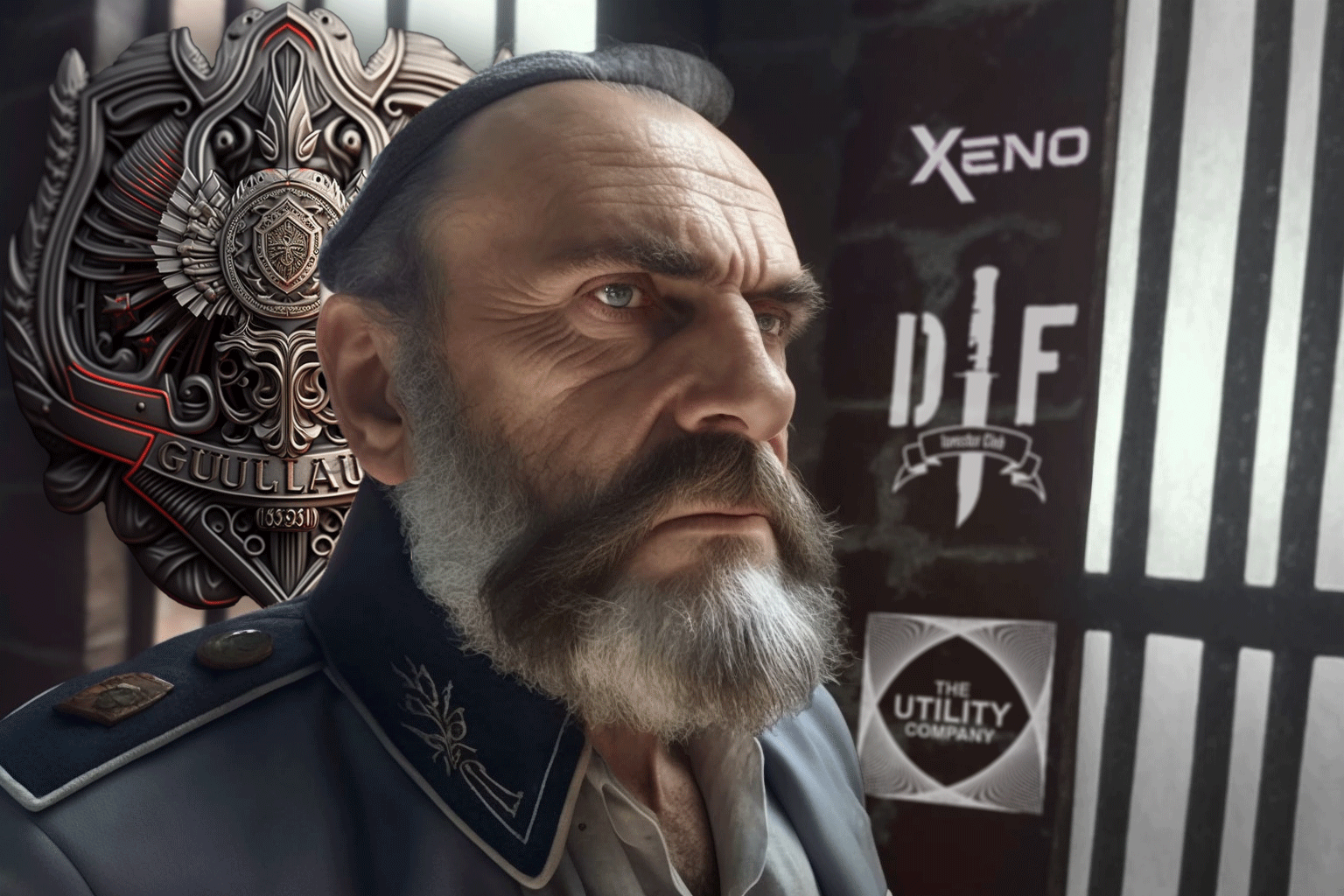
The Warden's seat isn't a throne—it's a target.
Every decision is scrutinized. Every ruling has detractors. Every policy change spawns conspiracy theories about bias and corruption. The Warden exists in a state of permanent accountability, where any mistake becomes ammunition for critics.
But that's kind of the point.
Power without accountability is tyranny. The Gulag was designed with checks and balances precisely *because* it deals with people who've already been punished. The last thing you want is an authoritarian running a prison full of people already predisposed to distrust authority.
So the Warden operates transparently. Major decisions get explained. The reasoning is documented. Appeals processes exist and are taken seriously. The community can see that power is being exercised responsibly.
Does this make the job harder? Absolutely. Does it make the institution more legitimate? Without question.
The Seat of The Warden is a role that demands excellence precisely because so many eyes are watching. Rise to that challenge, and you earn something more than power—you earn trust.
How Wardens Are Made (Elections 101)
In The Gulag, leaders aren't appointed by divine right or corporate fiat. They're *elected*.
The election process starts with nominations. Anyone meeting the eligibility requirements can throw their hat in the ring. Community members can also nominate others (who can accept or decline).
Then comes the campaign period. Candidates make their case. What's their vision? How will they handle guild conflicts? What changes would they make? The community gets to kick the tires before making decisions.
Voting is straightforward: each eligible community member gets one vote. No electoral college nonsense. No weighted voting. Pure democracy, applied to prison administration.
The candidate with the most votes becomes the new Warden. Power transfers. The cycle continues.
This process does something important: it reminds everyone that authority comes from the community. The Warden serves at the pleasure of the governed. And if they govern poorly? The next election waits.
It's not perfect—no election system is. But it's *legitimate* in a way that top-down appointments never could be.
Making the Hard Calls
Every day, the Administration faces decisions that don't have clean answers.
Guild A accuses Guild B of resource theft. Witnesses conflict. Evidence is circumstantial. What do you do?
A long-standing member's behavior has *technically* stayed within rules, but the spirit of those rules is being clearly violated. How do you handle it?
Two equally valid interpretations of a policy lead to opposite conclusions. Which one wins?
The Administration develops institutional knowledge about how to handle these situations. Precedents get established. Judgment calls get documented so future cases can reference them. The law evolves through application.
But there's no escaping the fundamental truth: someone has to make the call. Someone has to say "this is how it is" and accept the consequences. The Administration exists to be that someone.
It's not glamorous. It's often thankless. And it's absolutely essential.
The Rules That Bind (And Protect)
The Administration operates under a Code of Conduct that applies to *them* as much as regular members—arguably more.
No personal vendettas in official decisions. No favoritism toward friends or allies. No using administrative powers for personal gain. No sharing confidential information. No abuse of position.
These aren't suggestions. They're fireable offenses. Administrators who cross lines don't just lose their positions—they get prosecuted like any other community member. Sometimes more harshly, because they knew better.
The Code creates accountability. It tells every member of the community that the rules apply equally—that there's no separate tier of justice for those in power. It builds trust slowly, incident by incident, ruling by ruling.
And it keeps administrators honest. Knowing you're held to higher standards changes how you exercise authority. It forces thoughtfulness. It encourages humility.
Power corrupts. The Code is the countermeasure.
Problems We've Actually Solved
Theory is nice. Let's talk practice.
The Compliance Problem: In the early days, rule enforcement was inconsistent. One guard let something slide, another cracked down. Solution: documented standards, regular calibration meetings, and public explanations of enforcement decisions.
The Burnout Problem: Administrative work is exhausting. People quit. Institutional knowledge walked out the door. Solution: redundancy, documentation, rotating responsibilities, and sustainable workload expectations.
The Favoritism Problem: Admins have friends. Friends get in trouble. Does friendship matter? Solution: recusal policies, transparent decision records, and peer review of controversial calls.
The Legitimacy Problem: Why should convicted criminals listen to *any* authority? Solution: elections, community input, and consistent demonstration that the Administration serves the community's interests.
None of these are permanently "solved." They're ongoing challenges that require constant attention. But having systems to address them beats improvising every time.
What Comes Next
The Gulag Administration isn't done evolving. It can't be—the community keeps growing, challenges keep emerging, and what worked yesterday might not work tomorrow.
Future plans include expanding the guild system, adding new pathways for contribution and advancement. More channels for specialized interests. Better onboarding for new arrivals. Improved tools for tracking contributions and distributing rewards.
The goal isn't just maintaining order. It's building a community that people *want* to be part of. Where conviction isn't the end of the story, but the beginning of something better.
The Administration's job is to create the conditions where that story can unfold. To keep the peace without crushing the spirit. To enforce rules while nurturing growth.
It's a work in progress. But progress is the point.
"Someone has to keep the inmates from running the asylum. We just made it official.
The Copper Cutters Guild: A Convicted Group of Copper Cutters
Resource Extraction and Supply
Agent Eric's Fall (And Rise)
Every guild has an origin story. The Copper Cutters' begins with disgrace.
Eric was once a Central Intelligence Utility Agent—one of the elite. The kind of operator who handled sensitive assignments and knew where bodies were buried (metaphorically... probably). He had clearance. He had respect. He had a future.
Then he had a conviction.
The exact circumstances vary depending on who's telling the story. What's certain is that Eric found himself sentenced to The Gulag, stripped of his former status, just another inmate in Dimension GG4.261T's harshest prison.
But Eric wasn't the type to waste away in a cell.
He saw an opportunity. The Gulag needed raw materials—specifically copper—to support its growing economy. Someone had to supply it. Why not build something from nothing?
The Copper Cutters Guild was born from necessity and stubbornness. Eric recruited fellow inmates with relevant skills. He established operations in the North Wing. He built a supply chain from pure hustle and determination.
From fall to founding. From disgrace to legend.
What Copper Cutters Actually Do
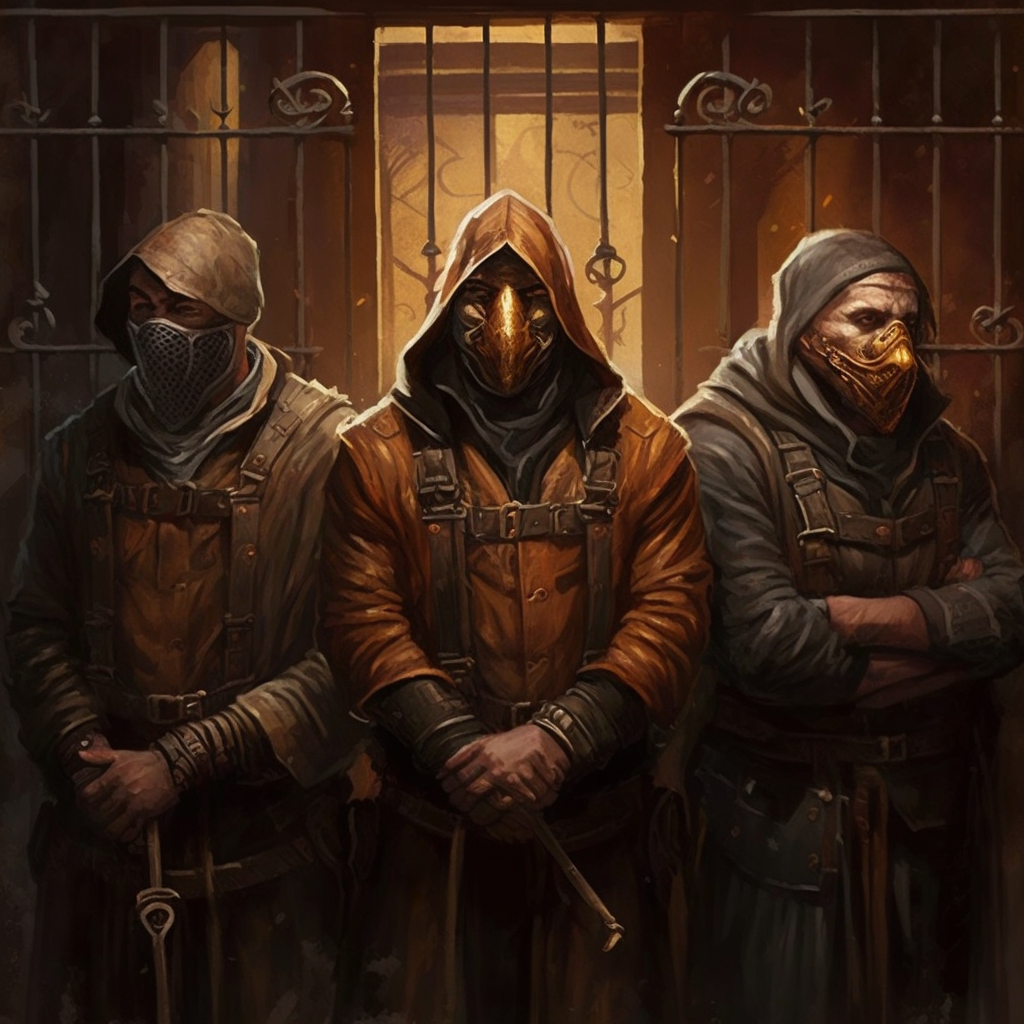
Strip away the narrative drama, and the Copper Cutters Guild is fundamentally about one thing: *production*.
These folks mine, extract, process, and distribute copper. It sounds simple. It's not.
In The Gulag's economy, copper is the foundational resource. The Pot Growers need it for equipment. The Bootleggers need it for their distillery operations. The Administration needs it for infrastructure. Everyone needs copper, which means everyone needs the Copper Cutters.
The guild operates like a well-oiled machine. Teams specialize in different aspects of the operation: extraction crews, processing units, logistics handlers, quality control. Each team has leaders. Those leaders report up to the guild master.
Work is tracked meticulously. Contributions are recorded. Performance matters. In a guild built on the idea that hard work leads to redemption, shirking responsibilities isn't just frowned upon—it's a betrayal of the guild's core identity.
The Copper Cutters take pride in being the backbone of The Gulag economy. Unglamorous? Maybe. Essential? Absolutely.
The People Who Make It Work
Beyond Eric, the Copper Cutters Guild has developed a cast of characters—members whose contributions shaped what the guild became.
The hierarchy is clear but earned. Leaders rose through demonstrated competence, not connections. The guild values output over politics, results over rhetoric.
Jack emerged as the top copper cutter—the person who actually oversees day-to-day production. While Eric provides vision and external representation, Jack makes sure quotas get met and quality stays high.
Lisa handles the finances. In an economy where every resource matters, her tracking of what comes in, what goes out, and who owes what keeps the guild solvent and profitable.
Then there are the rank-and-file cutters—the people doing the actual work. They're not just labor; they're the guild's future leadership. Today's grunt is tomorrow's team lead is next year's guildmaster candidate.
The Copper Cutters understand a fundamental truth: organizations are made of people. Invest in your people, and they'll invest in the organization.
The Hard Parts
Nothing worth doing is easy, and running a guild in prison is no exception.
Supply Challenges: Copper doesn't just appear. Maintaining steady supply requires constant effort, exploration of new sources, and adaptation when old sources dry up.
Internal Management: Keeping convicted criminals working together productively is exactly as difficult as it sounds. Personality clashes. Work ethic variations. People having Bad Days. The guild leadership spends considerable energy on interpersonal dynamics.
External Relationships: Other guilds want copper cheap. The Administration wants stability. Balancing everyone's needs while protecting the guild's interests requires constant negotiation.
Rules Compliance: Operating in The Gulag means operating under Gulag rules. Staying on the right side of the Administration while still running an effective operation is a perpetual balancing act.
But challenges are opportunities in disguise. Each problem solved makes the guild stronger. Each crisis survived builds institutional resilience.
The Copper Cutters don't avoid hardship—they embrace it as the crucible that forges excellence.
Where We're Going
The Copper Cutters Guild has ambitions beyond just being The Gulag's copper supplier.
Membership Growth: Recruiting new members with skills the guild needs. Not just warm bodies, but people who'll contribute meaningfully and potentially lead in the future.
Technical Innovation: Developing better techniques for extraction and processing. Efficiency improvements that make the guild more productive and profitable.
Strategic Partnerships: Deeper collaboration with other guilds. Not just seller-buyer relationships, but genuine alliances that create mutual advantage.
The Long Game: Eventually, the guild wants to expand beyond The Gulag itself. Eric's original vision wasn't just survival—it was building something that could participate in The Utility Company's broader Industrial Automation ecosystem.
The path from convicted copper cutter to legitimate industrial operator is long. But it's a path, not a dead end. And walking it together is what the guild is all about.
The Partnership Network
No guild is an island—especially not the one that supplies everyone else's raw materials.
The Copper Cutters' most significant partnership is with the Bootleggers Guild. It's symbiotic: the Bootleggers need copper for their distillery equipment, and the Copper Cutters discovered that certain distillation byproducts are useful in processing raw copper. Resources flow both ways. Trust has been built slowly, through countless transactions.
The Utility Company itself provides support—access to advanced technologies, marketing help, connections to broader networks. This isn't charity; TUC sees the guilds as testing grounds for I3AS concepts. But the support is real and meaningful.
Partnerships require maintenance. Regular communication. Clear expectations. Reliable follow-through. The Copper Cutters treat their relationships like the assets they are—investing in them, nurturing them, protecting them.
In The Gulag, your network is your lifeline. The guild understands this deeply.
What It All Means
The Copper Cutters Guild matters beyond its immediate members.
For The Gulag community: they're essential infrastructure. Without copper supply, half the economy collapses. Their reliability keeps everything else running.
For The Utility Company: they're a proof of concept. Can convicted individuals, organized effectively, become productive contributors to the I3AS vision? The Copper Cutters say yes.
For the members themselves: the guild is a second chance. A way to build skills, earn reputation, and chart a path from conviction to contribution. Every honest day's work is a step toward redemption.
The guild participates in Gulag governance. They vote in elections. They contribute to community decisions. They're not just inmates served by the system—they're citizens shaping it.
That transformation—from prisoner to participant—is the Copper Cutters' real product. Everything else is just, well, copper.
"From the raw earth, we extract the conduits of the future.
The Pot Growers Guild: A Convicted Group of Pot Growers
Cultivation and Harvest
The Legend of Sam The Capitalist
Before there was a Pot Growers Guild, there was Sam The Capitalist—and that's a name that deserves its own chapter in Gulag history.
Sam holds a distinction that no one else can claim: the first convict sentenced to Gulag GG4.261T. Not just any inmate. THE original. When the prison was empty cells and cold walls, Sam was there, marking time and making plans.
But Sam wasn't the type to sit idle. Where others saw punishment, he saw opportunity.
Sam had made his fortune in the pot-growing business on the outside. Not the most legal enterprise, sure, but he knew cultivation like nobody else. When other inmates started arriving, Sam organized. He taught. He built.
The Pot Growers Guild rose from nothing but seeds, soil, and Sam's relentless entrepreneurial energy. They started small—a few plots, a few members, doing things by hand. But Sam's vision was always bigger. Full-scale agricultural operations. Distribution networks. Market dominance.
From first prisoner to founding father. That's the Sam legacy.
The Coup Nobody Saw Coming
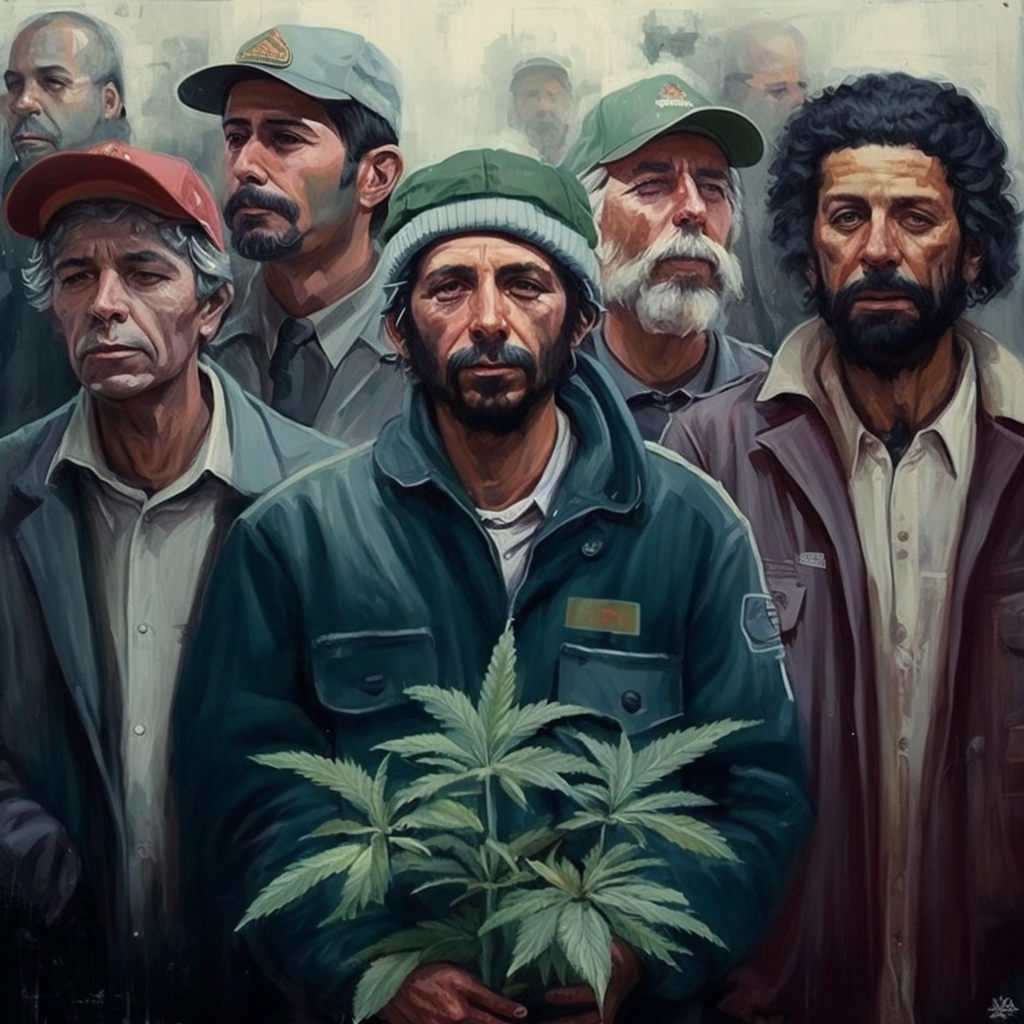
Every empire eventually faces a challenge from within.
Sam built the Pot Growers Guild, but he didn't build it alone. As the guild grew, so did its ambitions—and its politics. When AllenRiverCity joined as Sam's second-in-command, it seemed like the natural evolution. More leadership capacity. More hands for the expanding operation.
Then came the House of Haack.
Brett Haack and Beckie Haack didn't just want to participate in the guild—they wanted to *run* it. And they made their move with ruthless efficiency.
The exact details depend on who you ask. Some call it a coup. Others call it an inevitable transition. What's undeniable is the result: Sam and Allen found themselves pushed out, and the House of Haack assumed control.
Under Haack leadership, the Pot Growers Guild transformed. More structured. More aggressive. More powerful. The family consolidated control and professionalized operations in ways Sam's loose entrepreneurial style never had.
Whether that's progress or tragedy depends on your perspective. Either way, the guild that exists today bears the Haack stamp.
What the Guild Actually Does
Let's get practical. The Pot Growers Guild cultivates cannabis—in the narrative sense, within the simulation, don't @me.
But it's not just about growing plants. It's about building a complete agricultural operation from the ground up.
Cultivation: The core activity. Selecting strains, managing growing conditions, optimizing yield. Agricultural science applied to forbidden horticulture.
Processing: Raw plant becomes finished product. Quality control. Packaging. Preparation for market.
Distribution: Getting product to customers—primarily other Gulag members through the Commissary, but also special arrangements with other guilds.
Research: Developing new techniques, improving efficiency, experimenting with innovations. The guild invests in its future.
In The Utility Company's I3AS ecosystem, the Pot Growers demonstrate something important: agricultural automation principles applied at community scale. The techniques developed here feed back into understanding how technology can serve cultivation more broadly.
The hemp in TUC's NFT tokens? Guess where it comes from.
Navigating Gulag Life
Being a convicted group inside a prison community creates unique dynamics. The Pot Growers have learned to navigate them.
The Stigma Challenge: Pot growing isn't the most respectable profession, even among criminals. The guild has worked to rebrand themselves as agricultural experts, emphasizing skill and knowledge over... product.
Internal Conflicts: Any organization has drama. The Pot Growers have seen their share—including, obviously, the Haack takeover. Managing personalities while maintaining production is an ongoing effort.
Guild Relations: The other guilds view the Pot Growers with a mix of respect and rivalry. They're major players in the Gulag economy. That means they have power, which means they have targets on their backs.
Administration Compliance: Walking the line between profitable operation and rule compliance. The Gulag Administration watches all guilds, but agricultural operations get particular attention.
The guild that survives these challenges becomes stronger for it. The Pot Growers are still standing—and thriving—because they've learned from every obstacle.
The Code: Freedom and Responsibility
The Pot Growers Guild operates under a code of conduct that tries to balance individual liberty with collective responsibility. It's a trickier balance than it sounds.
Individual Freedoms: Members can grow in their allotted space. They can consume their own product. They have autonomy over their methods.
Collective Limits: Don't harm the guild's reputation. Don't undercut fellow members. Don't break administrative rules in ways that bring heat on everyone.
The Principle: Your freedom ends where another member's begins. Do what you want, except what hurts the group.
This philosophy mirrors The Utility Company's broader vision—self-reliance that's not just about individuals, but about communities building together. The guild succeeds when members succeed, which means individual success must be pursued in ways that support collective success.
It's libertarian with a communitarian twist. Freedom through mutual responsibility.
Not everyone gets this right all the time. But the principle provides guidance when situations get complicated.
The Redemption Road
The Pot Growers Guild isn't just an economic entity—it's a rehabilitation program.
Members enter as convicts. They leave as skilled cultivators with documented track records and proven abilities. The guild provides:
Skills Training: Agricultural techniques, business operations, quality control. Actual competencies that translate beyond The Gulag.
Reputation Building: Consistent contribution builds reputation. That reputation has value when it's time to reintegrate with the broader community.
Community Support: Guild members look out for each other. Mentorship, advice, sometimes just someone to listen when Gulag life gets heavy.
Structure and Purpose: Idle hands cause problems. The guild gives people meaningful work and clear goals.
The promise of redemption is real—with one catch. You have to earn it. The guild provides the path, but walking it is on you.
Under Haack leadership, the guild has become one of the most powerful factions in The Gulag. That success isn't just about the family at the top. It's about every member who showed up, did the work, and built something together.
That's the future of the Pot Growers Guild: a community of formerly convicted individuals who became agricultural innovators. From stigma to expertise. From prison to production.
Growth, in every sense.
"Growth requires patience, care, and a little bit of rebellion.
The Bootleggers Guild: A Convicted Group of Liquor Bootleggers
Distillation and Distribution

When a Sheriff and a Spy Walk Into a Prison...
The founding of the Bootleggers Guild reads like the setup to a noir joke. A disgraced sheriff. A fallen intelligence agent. And enough bad decisions between them to stock a confession booth for years.
Sheriff BeardedBro was once the law in these parts—respected, feared, trusted with keeping order. Then came accusations. Corruption. Abuse of power. The trial was messy and public. The conviction was swift.
Agent Brew had a different fall. Central Intelligence Utility doesn't discuss why their agents get burned. What's known is that Brew had clearance one day and a Gulag sentence the next. Some secrets stay secrets.
Two fallen power-holders, stripped of everything that defined them, thrown into the same prison. What do you do with all that frustrated ambition?
You build a bootlegging operation, obviously.
BeardedBro brought enforcement knowledge—understanding how contraband moves, where the weak points are, how not to get caught. Brew brought intelligence tradecraft—networks, drops, operational security.
Together, they built the Bootleggers Guild from the East Wing up. Moonshine flowing within months. A black market economy within the year.
From fall to founding. It's a pattern in The Gulag.
The Faces Behind the Brands
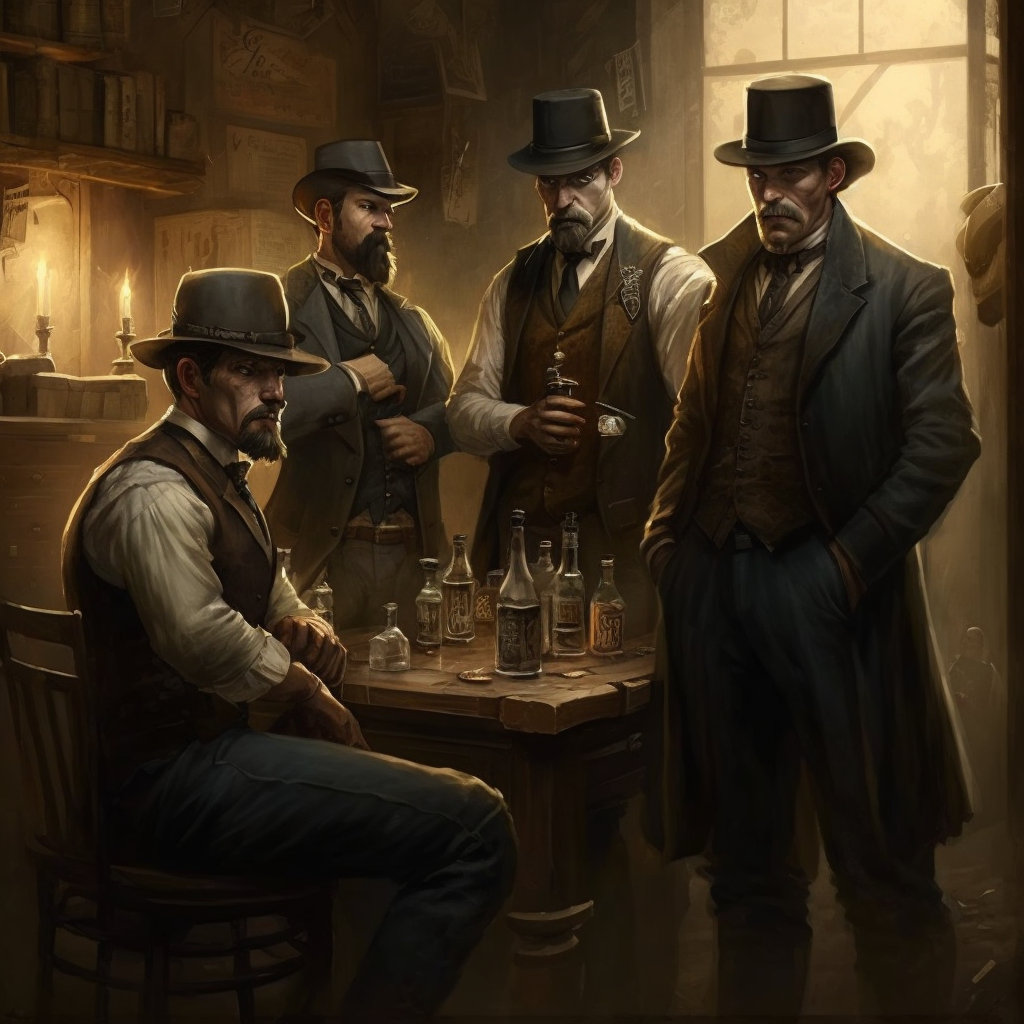
The Bootleggers Guild has attracted more than its share of colorful characters. When your guild is literally about producing illegal alcohol, even by prison standards, you don't attract the timid.
The founding duo set the tone—but the guild grew through recruitment of specialists. Distillers with actual chemistry knowledge. Smugglers with logistics experience. Salespeople who could move product without attracting administrative attention.
The guild developed a reputation: work hard, party harder, trust no one outside the family. That last bit matters. When you're moving contraband, loose lips don't just sink ships—they get people sentenced to solitary.
Internal culture emphasizes loyalty and competence in equal measure. Do your job well. Keep guild business in the guild. Stand by your brothers and sisters when they need you.
The result is a tight-knit organization that outsiders find hard to penetrate. Which is exactly the point.
The Moonshine Operation
Let's talk about the core business: making booze that shouldn't exist.
Somewhere in the depths of the East Wing, hidden from casual observation, the Bootleggers operate a distillery. It's not fancy—prison equipment never is—but it's effective. Corn mash goes in. Moonshine comes out. Chemistry isn't complicated when you know what you're doing.
But the distillery is just the beginning.
Sourcing: Raw materials don't appear magically. The guild maintains supply chains for grain, yeast, sugar—whatever the recipes require. Some of this comes through official Commissary trades. Some... doesn't.
Processing: Quality control matters. Badly made moonshine can blind you or worse. The Bootleggers take pride in product quality. Their reputation depends on it.
Distribution: Getting product to customers without attracting attention. Dead drops. Trusted intermediaries. Coded communications. The intelligence tradecraft from Brew's past life finds practical application.
Procurement: Not all liquor is made in-house. The guild also sources from outside connections—whiskey, vodka, specialty items for discerning palates. When you want something specific and are willing to pay, the Bootleggers can usually deliver.
In The Gulag economy, liquor plays multiple roles. Recreation, obviously. But also currency—a reliable store of value that everyone wants. And social lubricant, literally, for negotiations and celebrations.
The Bootleggers supply it all.
The Underground Economy
The Bootleggers Guild doesn't just sell liquor—they're at the heart of The Gulag's shadow economy.
Every prison has one. Official commissary for official goods, and unofficial channels for everything else. The Bootleggers built their empire on understanding this fundamental truth.
Contraband Networks: Liquor is just the flagship product. The same channels that move moonshine can move other things. Luxury goods. Information. Favors.
Connections: The guild maintains relationships with members of the outside world—people who can bring things in that aren't available through legitimate channels.
Service Economy: Sometimes what people need isn't a product but a service. An introduction to the right person. Help navigating administrative processes. The kind of assistance that isn't offered officially but is extremely valuable.
The Administration knows this shadow economy exists. They tolerate it within limits because the alternative—total prohibition—would be unenforceable and destabilizing. Better to have channels they understand than drive everything so far underground it's invisible.
It's an uneasy balance. The Bootleggers walk the line between profitable operation and going too far. So far, they've been good at it.
The Bootleggers' Code
Rules among rule-breakers? Absolutely.
The Bootleggers Guild operates under a code of conduct that members take seriously. Not because the Administration requires it, but because the guild's survival depends on it.
No Stealing From Members: Obvious, but foundational. Guild brothers and sisters are off-limits. Period.
No Violence Without Authorization: Muscle has its place, but freelance enforcement causes problems. Disputes go through guild leadership.
No Snitching: This one's life-or-death. Information about guild operations stays in the guild. Violators face consequences worse than anything the Administration would do.
No Outside Exploitation: Selling to non-guild members is fine. Exploiting them through force or fraud is not. Bad reputation spreads and hurts everyone.
Commissary Conduct: Trade in the Commissary follows established norms. Fair dealing, honest measuring, prompt delivery.
Violations bring consequences escalating from warnings to loss of guild privileges to, in extreme cases, expulsion. Given how much protection guild membership provides, expulsion is essentially a death sentence for life in The Gulag.
It's a code built on pragmatism. The behaviors prohibited aren't banned because they're morally wrong, but because they threaten the guild's cohesion and reputation. The logic is cold but effective.
Democratic Gangsters
Here's the twist: the Bootleggers Guild is one of the most democratic organizations in The Gulag.
Leadership isn't seized through force or inherited through connections. It's elected.
The guild operates through a council of seven members, each representing a different area of guild operations. Council seats are elected every three months. Every full member gets one vote.
Want to serve on the council? You need at least one month of guild membership and good standing with the Administration. Announce your candidacy. Campaign. Let the members decide.
The council makes major decisions: profit distribution, resource allocation, strategic direction, disciplinary matters. Individual council members handle their areas of responsibility, but major choices require consensus.
Why democracy? Partly pragmatism—giving members voice increases buy-in and reduces internal conflict. Partly values—BeardedBro's law enforcement background and Brew's intelligence experience both included deep familiarity with how authoritarian structures fail.
The result is an organization that's both criminal enterprise and participatory community. Contraband and consent. Moonshine and voting rights.
Only in The Gulag.
What's Next for the Family
The Bootleggers Guild has plans, and they're not small ones.
Product Expansion: New types of liquor. Specialty items for high-value customers. Maybe even aging programs for premium goods (if they can find the storage).
Channel Development: More reliable supply chains. Better distribution networks. Reducing risk while expanding reach.
Partnerships: Deeper relationships with other guilds. The Copper Cutters collaboration works well—similar arrangements with the Pot Growers could create new opportunities.
Talent Acquisition: Actively recruiting members with specialized skills. Chemistry knowledge. Logistics experience. Intelligence backgrounds. The guild needs more than labor—it needs expertise.
External Expansion: The long-term dream is operations beyond The Gulag itself. If The Utility Company's I3AS vision pans out, there might be legitimate (or at least less illegitimate) opportunities for the skills the Bootleggers have developed.
The guild that BeardedBro and Brew founded from disgrace has become a pillar of The Gulag economy. Its future—like the futures of all The Gulag's factions—depends on continued adaptation, smart leadership, and the right amount of luck.
The moonshine keeps flowing. The story keeps developing.
Pour one out for the journey still ahead.
"In the shadow of the law, we brew the spirit of freedom.
The Grand Narrative: Building Strong, Wealthy Guilds in The Gulag
The Vision That Binds
Why Stories Matter More Than Rules
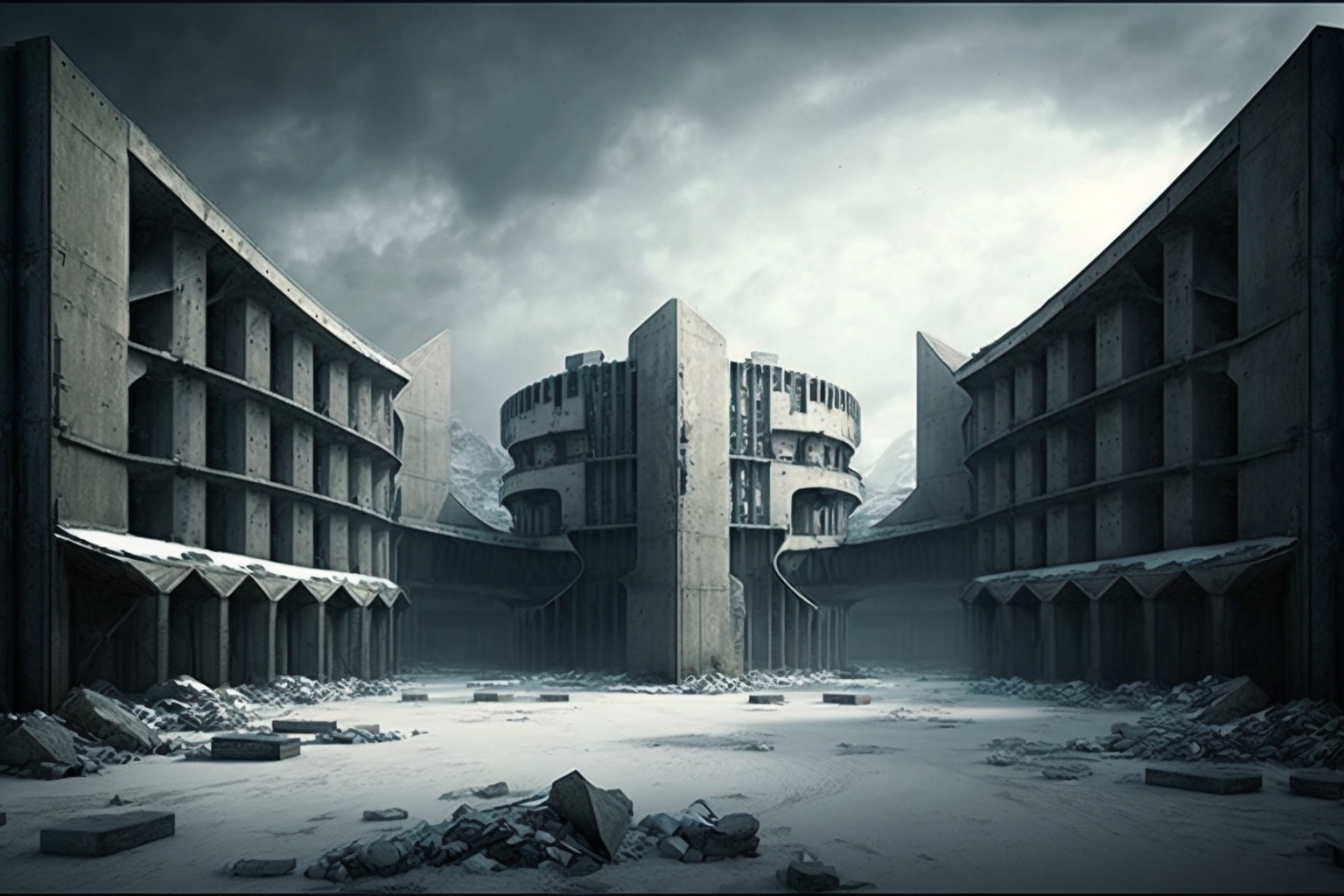
Here's the thing about running a community built on convicts: rules alone don't cut it.
You can have the best structures. The fairest elections. The clearest guidelines. But if people don't *believe* in what they're building, it falls apart the moment enforcement lapses.
The Grande Narrative is the antidote to that problem.
It's not just documentation—it's mythology. The story of how the guilds formed, why they matter, and where they're heading. A shared narrative that gives meaning to the daily grind of copper cutting, pot growing, and moonshine making.
Every guild member isn't just working a job. They're writing their chapter in an ongoing epic. Their story of fall and redemption becomes part of something larger. The hardships they endure are plot points, not just suffering.
That psychological frame transforms the experience. Suddenly, the rules aren't constraints imposed by authority—they're the physics of the story universe, the framework within which heroic (or antiheroic) action happens.
Stories make communities cohere. The Grande Narrative is The Gulag's story.
The Redemption Arc Pattern
Every Grande Narrative character follows a similar arc. Not identical—the details differ—but the shape is consistent.
The Fall: Everyone in The Gulag was something before their conviction. Agents. Sheriffs. Entrepreneurs. Citizens with standing. Then came the mistake, the crime, the judgment. Stripped of status. Sentenced to prison.
The Initiation: Arrival in The Gulag. New identity. Assignment to a wing. The disorientation of entering a strange world with strange rules. Learning to survive.
The Forge: Guild membership. Hard work. Building skills. Developing relationships. The long middle act where character is tested and transformed. Some people break here. Some become stronger.
The Emergence: Leadership opportunities. Increasing responsibility. Contributing to the community in ways that matter. The transition from served to serving.
The Return (eventual): Release from The Gulag. Reintegration with the broader community. Not as the person who was convicted, but as the person who was forged.
This arc isn't automatic. People fail at every stage. But having the pattern—knowing what the journey looks like—provides structure for individual effort.
You know where you're trying to go. You can measure your progress. You can see others ahead of you and know the path is walkable.
Three Guilds, One Vision
The Copper Cutters, Pot Growers, and Bootleggers aren't just economic units—they're different expressions of the same core vision.
Self-Reliance: Every guild teaches its members to produce value. To create more than they consume. To develop skills and knowledge that have worth independent of external validation.
Community Building: Guilds are teams. They require cooperation as well as individual effort. The skills developed—communication, conflict resolution, collective action—translate beyond The Gulag.
Earned Redemption: Nothing is given. Everything is earned. The guilds provide opportunity, not guarantee. Members who put in the work get results. Those who don't, don't.
The specific activities differ—copper, cannabis, liquor—but the underlying pattern is the same. Take convicted individuals. Give them meaningful work. Create structures that reward contribution. Watch them transform.
The Utility Company's broader vision of industrial automation serving community self-reliance? That's expressed in miniature here. If it can work in prison, maybe it can work anywhere.
Sustainability: Being Here for the Long Haul
A narrative that only works for a moment isn't much of a narrative.
The Grande Narrative is designed for sustainability. Not just for this group of inmates, but for the ones who come after. Not just for current conditions, but for whatever emerges next.
I3AS Integration: The Utility Company allocates automation assets and access tokens to each guild. These aren't gifts—they're investments. Resources that help guilds operate more efficiently and contribute to the broader I3AS ecosystem being developed.
Self-Sufficiency: Guilds are encouraged to be economically self-sustaining. Not dependent on external subsidy. Building the capacity to survive and thrive on their own productivity.
Knowledge Transfer: Experienced members mentor newcomers. Leadership skills get passed down. The organizational wisdom of the community accumulates rather than dissipating when individuals leave.
Adaptive Structures: The governance systems can evolve. Elections reset leadership. Policies can be revised. The narrative framework accommodates change without losing coherence.
Sustainability isn't glamorous. It's documentation and training and boring maintenance work. But it's what separates meaningful projects from flash-in-the-pan experiments.
The Grande Narrative is built to last.
The Promise and The Path
The promise is simple: work hard, build something real, earn your way to something better.
The path is not.
Redemption isn't a straight line. There are setbacks. Bad decisions. Conflict with guildmates and administration. Days when the whole thing feels pointless.
But the narrative provides direction even when the ground feels unstable. You know—even if you can't feel it today—that the story has a shape. That people before you have walked this path. That the destination, while distant, is real.
For the guilds: The promise is wealth and power within The Gulag, and eventually, legitimate standing in the broader Utility Company ecosystem.
For individual members: The promise is skills, reputation, and a genuine second chance at meaningful participation in community life.
For The Utility Company: The promise is proof of concept—demonstration that these principles actually work when applied to the hardest cases.
The Grande Narrative holds these promises together. It's the connective tissue that binds individual ambition to collective vision to organizational mission.
Every copper wire. Every harvested crop. Every bottle of moonshine. All of it contributes to the story. All of it moves the narrative forward.
That's what makes The Gulag more than a prison. That's what makes it a community building its future, one chapter at a time.
"Every story of redemption needs a beginning in fall. Ours started with sentences. It ends with freedom.
Code of Conduct: Rules and Regulations for Community Engagement
The Laws That Bind Us
Why We Need Rules (Yes, Even Here)
Look, we get it. A code of conduct in a prison community feels a bit ironic. Everyone here already broke rules at least once—that's why they're here.
But here's the thing: rules aren't about control for control's sake. They're about creating predictability.
When everyone knows what's expected, they can plan. They can trust (within reasonable limits). They can focus on their work instead of constantly watching their backs.
The Gulag Code of Conduct exists to establish that predictability. Not because anyone thinks convicts are going to spontaneously become rule-followers, but because clear expectations create space for real community to form.
The code promotes stability. The Grande Narrative provides meaning. Together, they create conditions where redemption arcs can actually happen.
Without this foundation? Just chaos. The strong preying on the weak. Zero-sum competition destroying any chance of collective progress.
So yes, rules. Because the alternative is worse.
The Basics: Don't Be Terrible
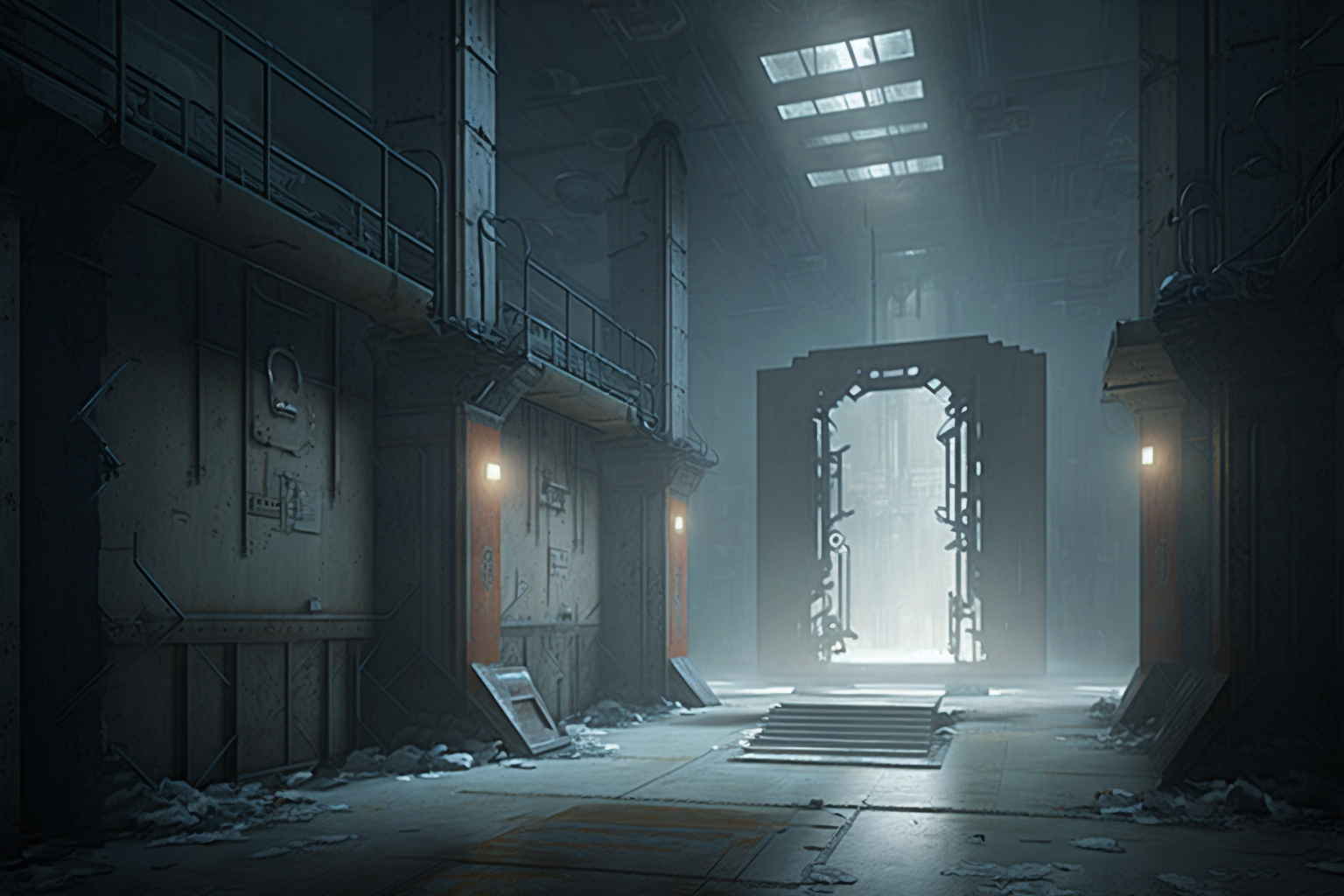
Let's start with the obvious stuff. The rules that exist because somehow someone made them necessary:
Respect Other Members: Radical concept, we know. Regardless of guild affiliation, criminal history, or personal beef—treat people like they're people. No slurs. No attacks on identity. No making The Yard a hostile environment.
No Spam: The channels aren't your personal billboard. Keep content relevant. Keep quantity reasonable. Nobody wants to scroll through fifty emoji reactions to find actual conversations.
No Scamming: This is literally a community of criminals and *we're* saying don't scam each other. The ecosystem depends on basic trust. Undermine that, and everyone suffers.
No Illegal Activities: Even by Gulag standards. Some things are out of bounds everywhere. Hacking. Piracy. Anything that would bring real-world legal consequences down on the community.
Follow Guild Rules: Each guild has additional rules specific to their operations. If you're a Pot Grower, follow Pot Grower rules. If you're a Copper Cutter, follow Copper Cutter rules. Your guild, your additional obligations.
This isn't complicated. Don't be terrible. Let other people do their thing. Basic prison etiquette, really.
Communication: How to Disagree Without Drama
Conflicts happen. In any community. In a community of convicted criminals? Count on it.
The code doesn't pretend everyone will get along. Instead, it provides frameworks for productive disagreement.
Respect First: Even when you're furious. Even when the other person is clearly wrong. The moment you switch from arguing a point to attacking a person, you've lost the argument anyway.
Actually Listen: Before responding, make sure you understand what's being said. Half of all Discord drama comes from people arguing past each other because nobody takes time to comprehend before they clap back.
Open Mind: Maybe you're wrong. Maybe they're wrong. Maybe you're both wrong. Consider the possibility that your position isn't the only valid one.
Constructive Feedback: If you're criticizing, offer something useful. "This sucks" isn't feedback—it's venting. "This sucks because X, maybe try Y" is actually helpful.
The goal isn't agreement. It's productive exchange. People can disagree and still work together if they disagree respectfully.
Flame wars, on the other hand, help nobody and waste everyone's time.
The Things You Cannot Do
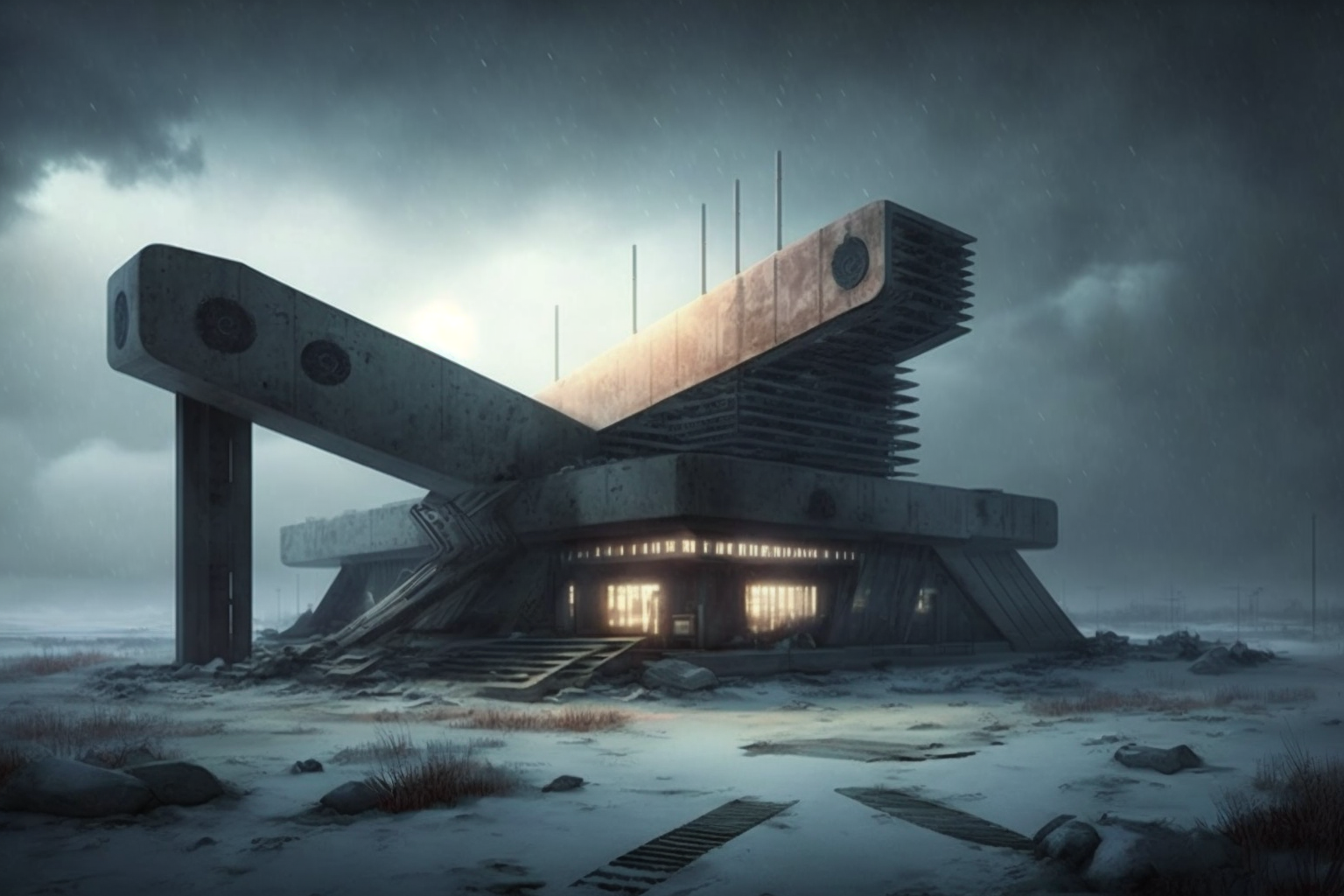
Some behaviors cross lines that communities can't tolerate. These are the bright-line prohibitions:
Harassment and Bullying: This gets you removed, period. Targeted campaigns against other members. Racist, sexist, homophobic attacks. Making people feel unsafe. Zero tolerance.
Hate Speech: Advocacy for violence against protected groups. Dehumanizing rhetoric. The kind of content that makes communities toxic and attracts the worst elements. Not here.
Sharing Illegal Content: Pirated software. Copyrighted material distributed without rights. Anything that creates legal liability for the community.
Doxxing: Sharing personal information about members without consent. Real names. Addresses. Phone numbers. Anything that could enable real-world harm.
Severe Spam: Not just annoying, but disruptive. The kind that breaks channels and makes them unusable.
These aren't negotiable. They don't get warnings. The behaviors themselves are so damaging that allowing them at all destroys the trust the community depends on.
Cross these lines, and you're not getting a talking-to. You're getting sentenced.
When Rules Get Broken: Reporting and Enforcement
Rules mean nothing without enforcement. Here's how that works.
Reporting: If you see a violation, report it. Whether to guild leadership (for internal matters) or the Gulag Administration (for broader issues). Don't handle it yourself unless you're authorized to.
Investigation: Reports get investigated. Not every report is valid; some are misunderstandings, some are personal vendettas dressed up as rule-breaking. The Administration figures out what actually happened.
Proportional Response: Minor violations get minor consequences—warnings, maybe temporary loss of privileges. Major violations get major consequences—suspension, removal, or worse.
Appeals: Think you got a raw deal? There's an appeals process. Make your case. The Administration reviews. Final decision gets made.
The system isn't perfect. No system is. But it tries to be fair, transparent, and consistent. Same rules for everyone. Same processes for everyone.
If you're going to have authority, it needs checks. The enforcement framework provides those checks.
Consequences: What Happens When You Screw Up
Violate the code, face consequences. What consequences? Depends on what you did.
Warnings: First offense for minor stuff. Official acknowledgment that you messed up. Goes on your record.
Privilege Suspension: Lose access to certain channels, features, or activities. Temporary—demonstrate better behavior and you get them back.
Guild Discipline: For inter-guild matters, your guild handles it. They know you. They know the context. Let them sort it out.
Community Removal: For serious violations, you're out. Not the Gulag—you were already in the Gulag. This is solitary. Exile. Gone.
Escalation: Repeated minor violations escalate. First warning, second warning, then actual consequences. Pattern matters.
The severity matches the offense. Accidentally spam once? Warning. Systematically harass someone? Gone. The punishment fits the crime.
And just like in the outside world—ignorance isn't an excuse. The rules are published. Read them.
Changing the Rules: Amendments and Evolution
The Code of Conduct isn't scripture. It's a living document.
Communities change. New situations arise. What made sense in year one might not make sense in year three. The code needs to adapt.
Amendment Process: Changes can be proposed. They get discussed. If there's consensus that an update is needed, it happens. The Administration has final say, but community input matters.
Communication: When rules change, everyone gets notified. No stealth edits. No gotcha enforcement of rules people didn't know about.
Documentation: The current version is always available. Historical versions are archived. You can see how the code evolved over time.
Feedback: If you think a rule is unjust or ineffective, say so. Through proper channels. The Administration listens (though they don't always agree).
A code that can't change becomes a code that doesn't work. New situations demand new responses. The framework allows for that while maintaining stability.
Change is orderly. Change is transparent. Change serves the community.
That's how governance should work, even—especially—in prison.
"Rules without reason are tyranny. Rules with purpose are freedom's framework.
Conclusion: Promoting Stability and Order in The Utility Company Discord Community
The Grand Narrative continues
Why Any of This Matters
Discord is just a chat app. The Gulag is just a set of channels. The guilds are just role-playing factions.
Except when they're not.
What happens in communities—even digital ones, even fictional-framed ones—is real. The relationships formed are real. The skills developed are real. The sense of belonging that keeps people coming back? That's as real as anything in meat-space.
The faction system works because it channels human needs that exist everywhere: the need to belong, the need to contribute, the need to be recognized. It gives people tribes. It gives tribes purpose. It gives purpose structure.
The Utility Company understood something fundamental: online communities aren't just places to hang out. They're laboratories for governance, cooperation, and human organization. What works here might work elsewhere. What fails here is a lesson learned cheaply.
The Gulag matters because it proves something: even the hardest cases—convicted criminals in the harshest digital prison—can build functioning, thriving communities when given the right framework.
If it works here, it can work anywhere.
The Case for Structured Governance
Let's make the argument explicit: structure is good, actually.
A lot of online communities resist governance. They want to be "chill." They want to avoid "bureaucracy." They believe that rules will kill the vibe.
And then they wonder why their servers implode every six months when drama erupts and nobody knows how to handle it.
The Gulag's governance structure isn't overhead—it's infrastructure. It's the reason conflicts get resolved instead of festering. It's why leaders emerge instead of dictators. It's how power stays accountable instead of becoming tyrannical.
Stability: Clear rules create predictable environments. People know what to expect.
Accountability: Documented processes mean decisions can be reviewed. Power has to answer for itself.
Transparency: Visible structures build trust. Everyone can see how things work.
Participation: Election systems give people voice. They're not subjects—they're citizens.
Direction: Shared narrative gives purpose. Work has meaning beyond immediate benefit.
This isn't rocket science. It's just... good governance. Applied to Discord. Applied to prison role-play. Applied anywhere people gather and need to operate together.
NFTs and the Future of Community Trust
Here's where things get interesting technologically.
The Utility Company uses NFT technologies—not as profile pictures or speculation vehicles—but as infrastructure for community trust.
Provenance Tracking: Every contribution can be recorded on-chain. That copper you cut? Documented. That moonshine you distilled? Traceable. Immutable records of who did what.
Identity Verification: NFTs can represent guild membership, roles, and achievements. Fake credentials become harder when credentials are cryptographic.
Democratic Mechanisms: Voting rights can be tokenized. Governance participation becomes programmable. Power distribution becomes auditable.
Economic Infrastructure: Trade in the Commissary can be tracked transparently. No disputes about who sent what to whom.
This isn't blockchain hype—it's practical application. The technologies serve community needs, not the other way around.
The Gulag becomes a testing ground for ideas that could scale beyond Discord. If NFT-based governance works in a prison community, what else might it enable?
That's the R&D value. That's why The Utility Company invests in this.
The Exportable Model
Nothing about The Gulag is unique to The Utility Company. The model is replicable.
Want to run a Discord community with actual governance? Here's what you need:
Faction Structure: Give people tribes to belong to. Distinct identities. Meaningful differentiation. Let them compete and collaborate.
Clear Authority: Someone has to make decisions. Define who, how, and under what constraints. Build in accountability.
Documented Rules: Write things down. Publish them. Reference them when enforcing.
Election Processes: Let people choose their leaders. Create legitimacy through participation.
Narrative Framework: Give meaning to the structure. Tell a story that makes the rules feel organic.
Escalation Paths: Define how conflicts get handled. Who decides what. How to appeal.
The specifics can vary—your guilds might be different, your narrative might have different themes—but the principles translate.
The Utility Company publishes this whitepaper not as bragging but as blueprint. Take what works. Adapt what doesn't fit. Build something that serves your community.
We'd rather have functional communities everywhere than a monopoly on the techniques.
Where We Go From Here
The Grande Narrative isn't finished. It can't be—living communities keep writing new chapters.
For The Gulag: More guilds, perhaps. More sophisticated economics. Deeper integration with I3AS technology. The community has runway for years of evolution.
For The Utility Company: The insights from The Gulag feed back into broader strategy. What works here informs how other communities get structured.
For You: Whether you're a current member, a prospective member, or just someone curious about community design—this story isn't spectator sport. It's participatory.
The guilds need members. The Administration needs candidates. The narrative needs writers.
Convicted or not, there's a place here. Skills to develop. Contributions to make. Chapters to write.
The Gulag may be a prison, but it's a prison with a purpose. A prison where sentences don't just count down time—they count up achievement. Where the goal isn't punishment but transformation.
Self-reliance. Community building. Redemption earned.
Those aren't just slogans. They're architectural principles.
And the architecture keeps getting built, one member at a time, one guild at a time, one hard-won lesson at a time.
Welcome to The Grande Narrative.
Your chapter starts now.
Challenges We're Still Solving
Let's end honestly: this isn't all figured out.
Scale Challenges: The Gulag works at current size. What happens when it grows significantly? Governance that works for hundreds might not work for thousands.
Burnout: Running guilds and administrative positions takes effort. People get tired. Institutional knowledge walks out doors. Succession planning needs constant attention.
Drama: Despite all structures, humans remain human. Personal conflicts still flare. Egos still clash. The framework contains these issues but doesn't eliminate them.
Integration: Connecting The Gulag's internal economy to The Utility Company's broader I3AS ecosystem is technical work that's ongoing. The promise exceeds current reality.
Legitimacy: Getting convicted criminals to buy into governance requires constant demonstration that the system actually works for them. Trust is earned daily, not banked indefinitely.
These challenges aren't failures—they're the work itself. Communities are never "done." They're perpetual works in progress.
What matters is commitment to the process. Facing challenges openly instead of pretending they don't exist. Learning from mistakes. Iterating.
The Gulag isn't perfect. It's just... trying. And trying honestly is more than most communities manage.
Code of Conduct and Enforcement: The Unglamorous Essential
We talked about the Code of Conduct in detail elsewhere, but it bears emphasis: this is the foundation everything else builds on.
Without clear rules: chaos. Without fair enforcement: tyranny. Without community buy-in: rebellion.
Getting all three right—clarity, fairness, and buy-in—is the unglamorous work that makes everything glamorous work. It's the plumbing of community. Nobody notices when it's functioning. Everyone notices when it fails.
The Gulag invests heavily in getting this right. Not because it's fun (it's not), but because skimping here undermines everything else.
Rules that make sense and are applied consistently build trust. Trust enables community. Community enables the narrative.
The virtuous cycle works. But it starts with boring, careful attention to the basics.
Economic Opportunity and Self-Reliance
The final thread to weave together: this is ultimately about *economics*.
The Utility Company's vision is self-reliance through production. Creating more than you consume. Building real value that gives independence.
The guilds are training grounds for exactly this.
The Copper Cutters produce materials other guilds need. Their work creates value that sustains the broader ecosystem.
The Pot Growers cultivate products people want. Their agricultural expertise has worth.
The Bootleggers provide... let's say "recreational products." Their distillation and distribution skills are valuable.
Every guild teaches members that they can create value. That their work matters. That productivity is the path to standing.
This isn't just prison role-play. It's economic education in game form. The lessons about production, trade, and community economic health apply far beyond Discord.
If I3AS succeeds—if industrial automation really does get democratized—the people who learned these lessons here will be ready for it. They'll understand value creation. They'll know how to work within cooperative systems.
That's the promise of The Gulag: not just time served, but skills learned and economic capacity built.
From conviction to contribution.
That's The Grande Narrative in three words.
"The story is written by those who live it.
A whitepaper by
The Utility Company
Empowering communities through disciplined governance and creative freedom.
Return to Home